The Making
From Waste to Wonder
A five-stage journey transforming everyday refuse into architectural beauty. Each step has been refined through extensive experimentation to optimize material performance while maximizing carbon sequestration.
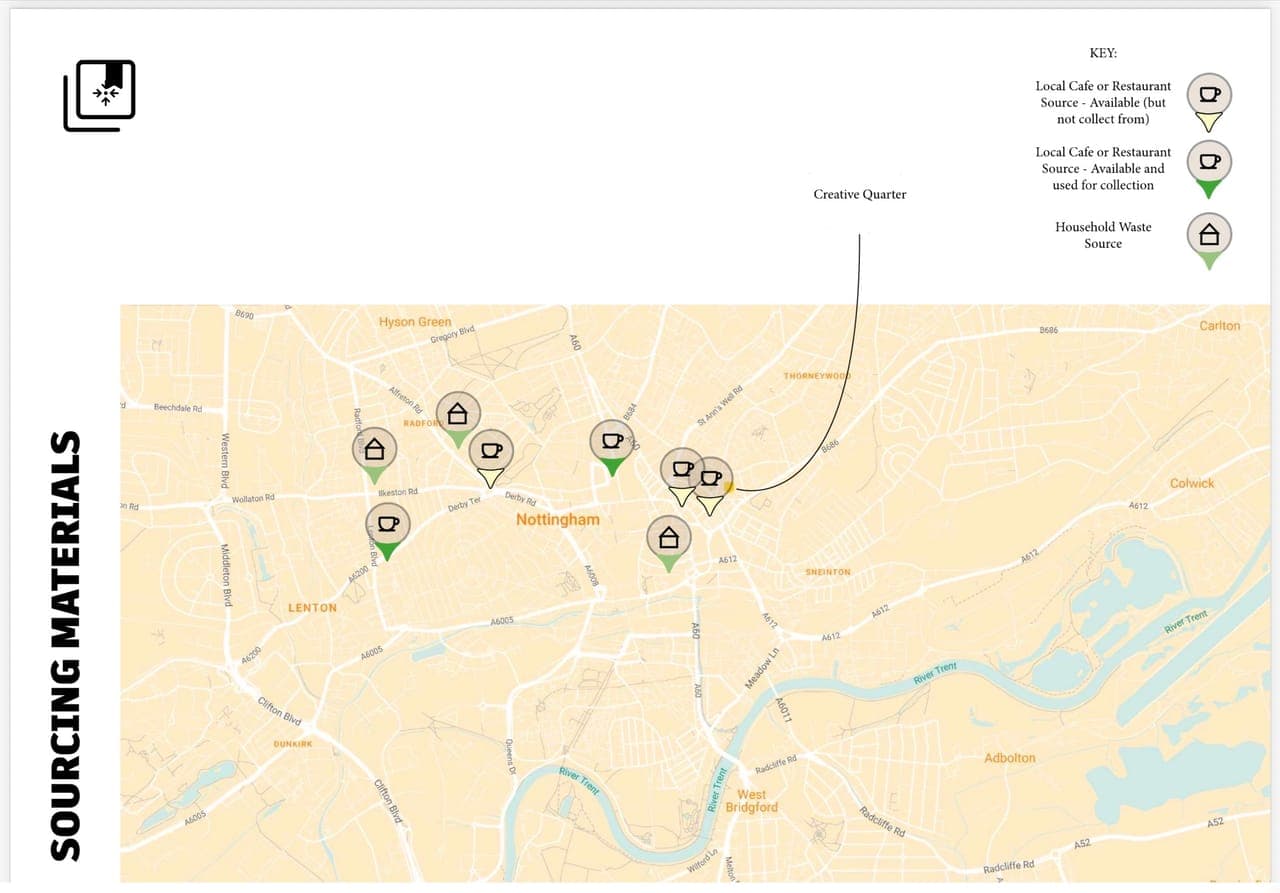
Collection & Sorting
Waste materials are collected from households and local businesses, then carefully sorted into categories: organic food waste (vegetable peelings, coffee grounds, eggshells), discarded textiles sorted by color, and plastic packaging for future research phases.
- Partner with local cafes for coffee grounds
- Collect household vegetable scraps
- Sort eggshells from food waste
- Categorize textiles by fiber type and color
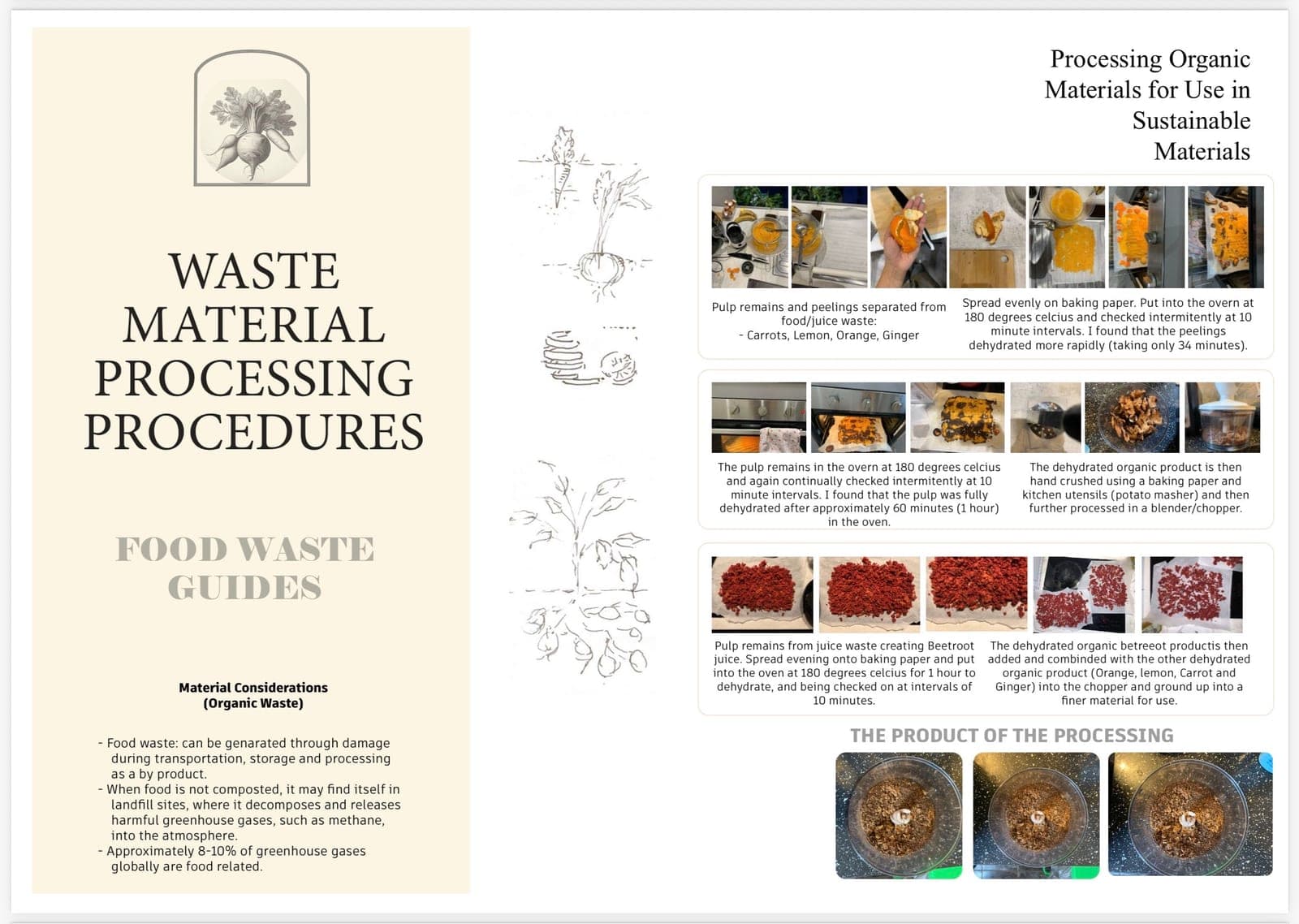
Processing & Preparation
Raw materials undergo transformation to become suitable additives. Organic materials are dehydrated at 180°C to remove moisture and prevent decomposition. Eggshells are boiled, demembraned, dried, and crushed. Textiles are shredded into fine fibers.
- Dehydrate organics at 180°C
- Boil and demembrane eggshells
- Crush shells to fine particles
- Shred textiles into fibers
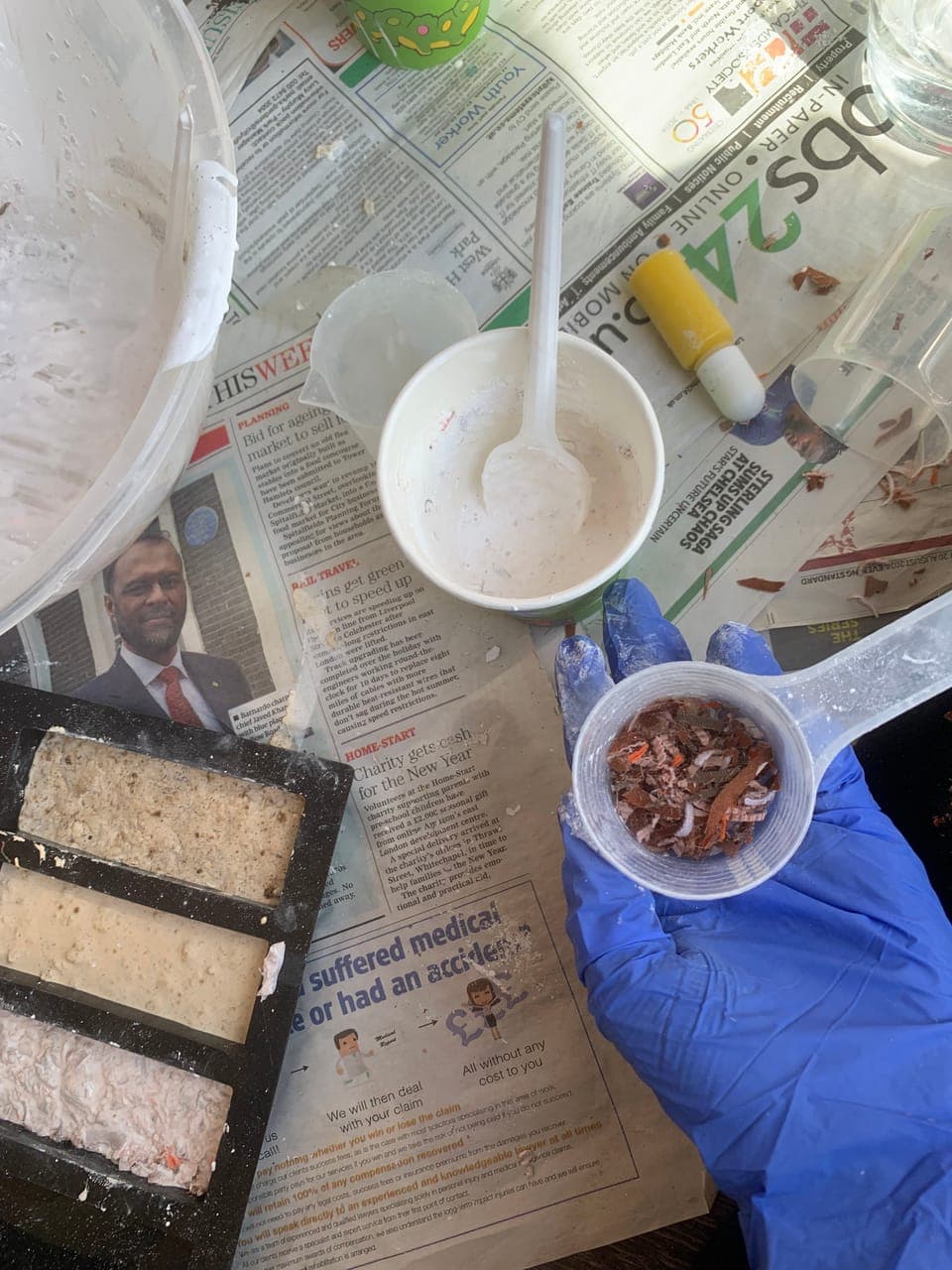
Trialling Stages, Composition & Casting
Processed waste additives are combined with a sustainable binding agent at optimal concentrations of 50-60% waste content for carbon sequestration. The mixture is thoroughly combined to ensure even distribution, then cast into silicone molds and left to cure under controlled conditions.
- Mix sustainable binding agent base
- Trialled 30%, 50% and 60% sustainably sourced waste additives
- Pour and cast using silicone molds
- Cure for 24-48 hours
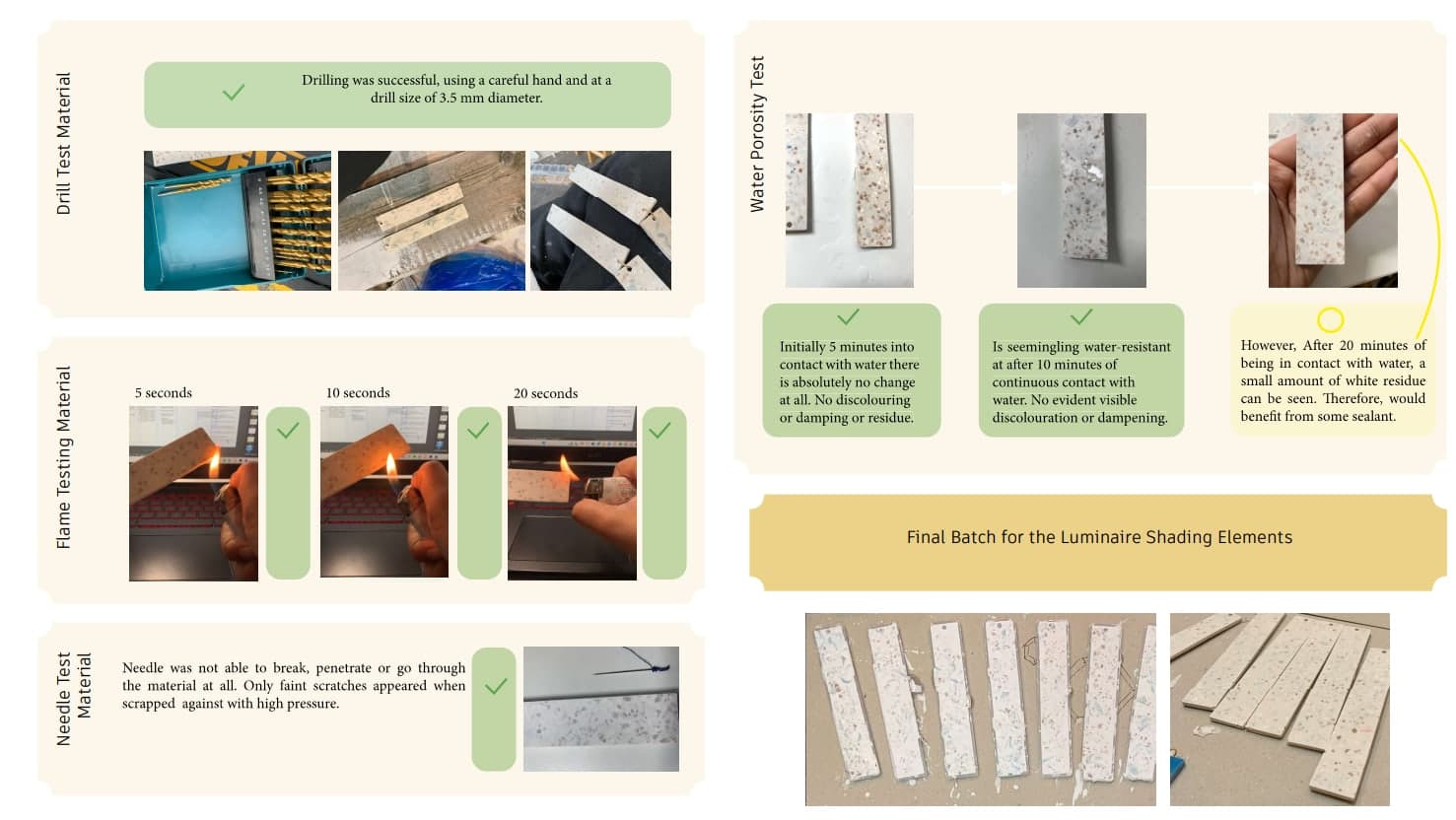
Testing & Finishing
Cured pieces undergo rigorous quality testing including flame resistance, water porosity, drill tests, and needle hardness tests. Approved pieces are sanded smooth and sealed with beeswax for enhanced water resistance and durability.
- Flame resistance test
- Water porosity assessment
- Structural integrity tests
- Beeswax waterproofing
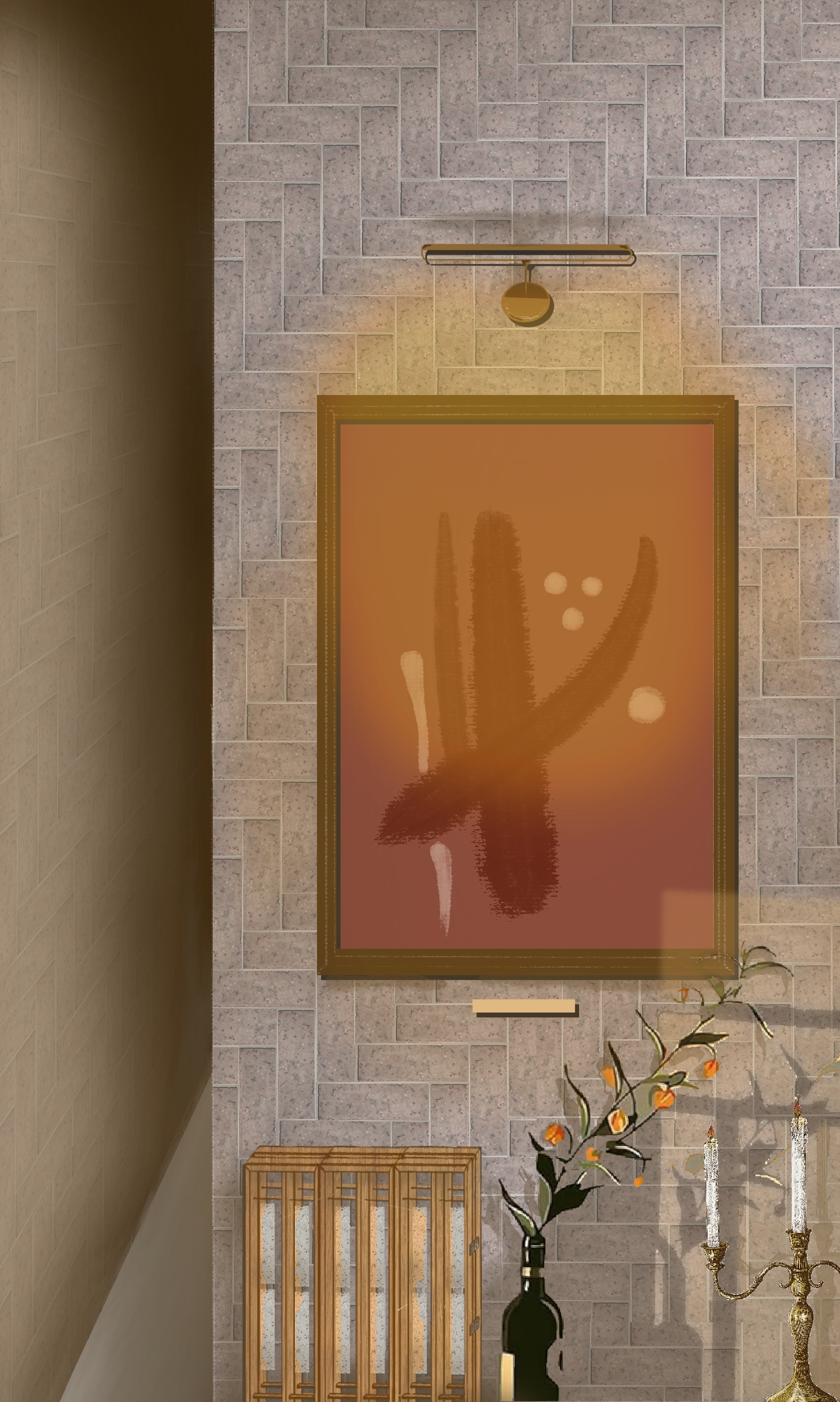
Internal Wall Cladding Tiles and Arrangement
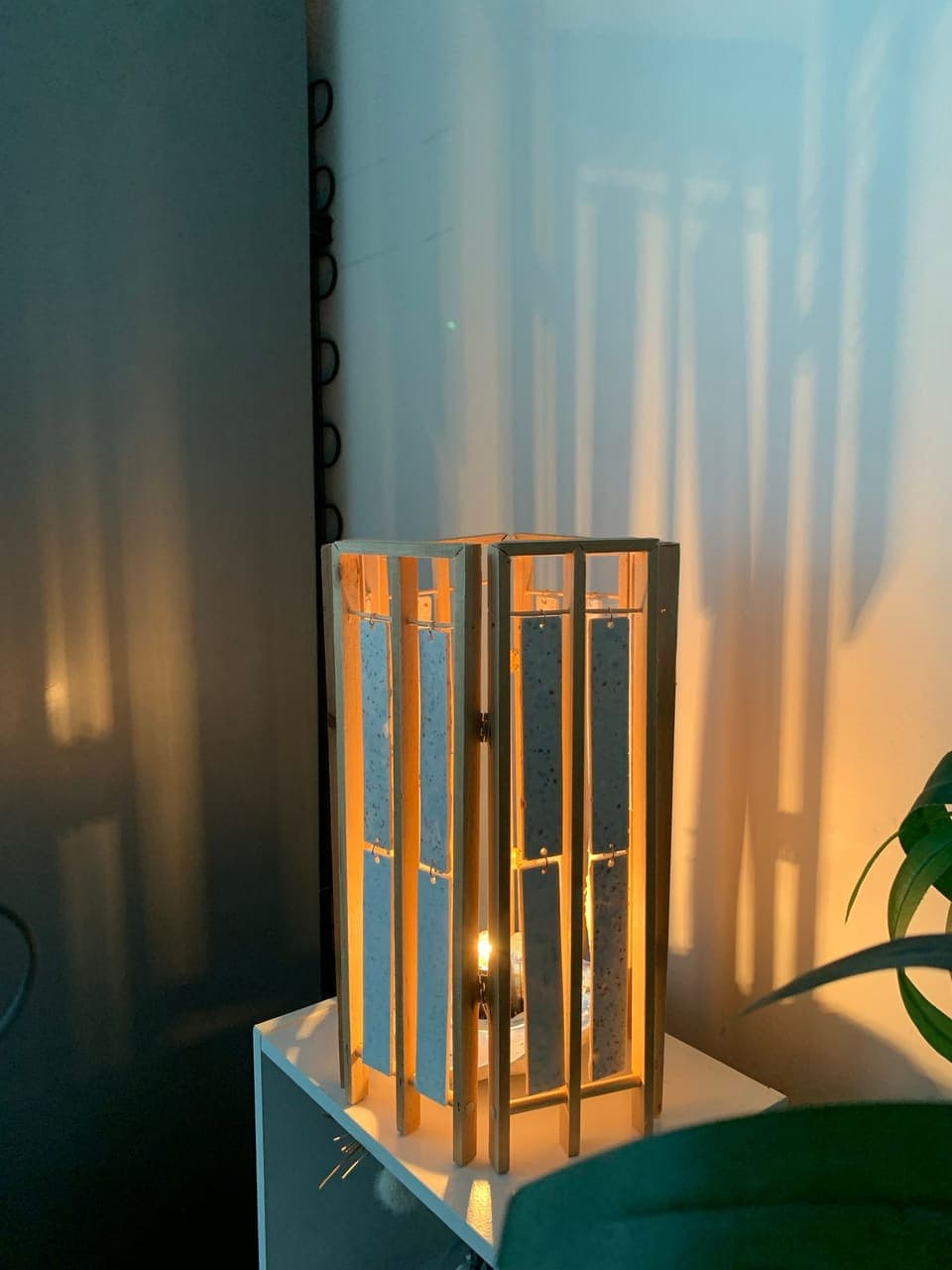
Furniture and Product Use Example: Adaptive Luminaire
Assembly
Final material compositions can be used as Internal Wall Cladding Tiles for feature walls.
Our researched and tested SoftCycle material compositions can be used and assembled into products and furniture. We have used one of our optimal carbon sequestering material compositions for the shading elements, used to develop the SoftCycle Adaptive Luminaire System. This Luminaire takes a sustainable approach to furniture and product design, using reclaimed wood frames, metal hoop connectors and the SoftCycle carbon sequestering materials. The modular system allows for multiple configurations, from flat panels to hexagonal prisms, adapting to various applications and multi-functional use.
- Construct reclaimed wood frames
- Attach tiles with metal hoops
- Configure modular arrangements
- Quality control inspection
Circular Design
Closing the Loop
Our materials are designed for complete circularity, returning to the earth at end of life without harmful residues.
Meet the researcher behind the work
Learn about the vision and motivation driving this sustainable materials research.
About the Project